Make it your WIP. Every contractor reads WIP a little differently. Add the KPIs, columns, and charts your team actually uses, no code, in Apps, so the schedule matches how you run the business.

Stop rebuilding your WIP. Start acting on it.
Nova builds your work-in-progress report from your project data, so over- and under-billing, percentage complete, and margin fade show up before you can act.
The report you can’t afford to get wrong.
The WIP schedule drives your revenue, your margin, your bonding, and the numbers your bank relies on. Most contractors still rebuild it by hand every month, and by the time it’s finished it’s already stale. If one line is off, everything downstream is off with it.
- Pull costs
- Reconcile billings
- Estimate % complete
- Reconcile over / under-billing
It reads itself, and flags what's wrong
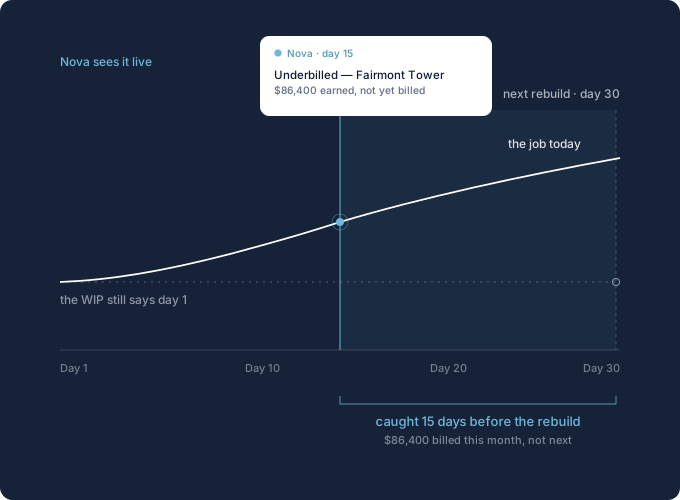
Nova draws the WIP schedule for you, automatically, every month. See at a glance which projects are billed ahead of the work completed and which are running behind, so you know where to focus before it becomes a cash flow problem.
See every project, then ask why
Contract, cost, projected final cost, percent complete, billed to date, and over/under-billing on every project, in one place. Drill into the detail behind any number, or just ask Nova, “which projects are underbilled and by how much,” and get the answer with the backup.
Always current, never rebuilt.
Nova pulls project data and keeps it up to date as costs, change orders, and billings come in. No monthly rebuild, no broken spreadsheet, no month-old snapshot. The report the whole company trusts is ready whenever you open it.
Over- and under-billing at a glance. See exactly which projects are over-billed and which are under-billed, and what that means for your cash, without rebuilding the schedule by hand.
Ready when your surety or bank asks. WIP drives your bonding capacity and your banking relationship. Nova gives you a clean, current, defensible WIP the day they ask for it, not a quarter-end scramble.
What is a WIP report in construction?
A work-in-progress (WIP) report shows, for each active job, how much you’ve earned versus how much you’ve billed, along with cost, percent complete, and projected margin. It’s the core report for knowing whether your jobs and your company are actually profitable.
What’s the difference between over-billing and under-billing?
Over-billing means you’ve billed more than you’ve earned to date (billings in excess of costs). Under-billing means you’ve earned more than you’ve billed (costs in excess of billings). Over-billing borrows against future work; under-billing means you’re financing the job with your own cash.
What are costs in excess of billings?
It’s the accounting term for under-billing: the value of work you’ve completed but haven’t billed yet. It shows up as an asset on the balance sheet, and as a cash-flow drag in real life.
How do I read a WIP report?
Compare the percent complete to the percent billed for each job. If you’ve earned more than you’ve billed, you’re under-billed; if you’ve billed more than you’ve earned, you’re over-billed. Then watch projected margin against the original estimate to catch fade.