
Accounting
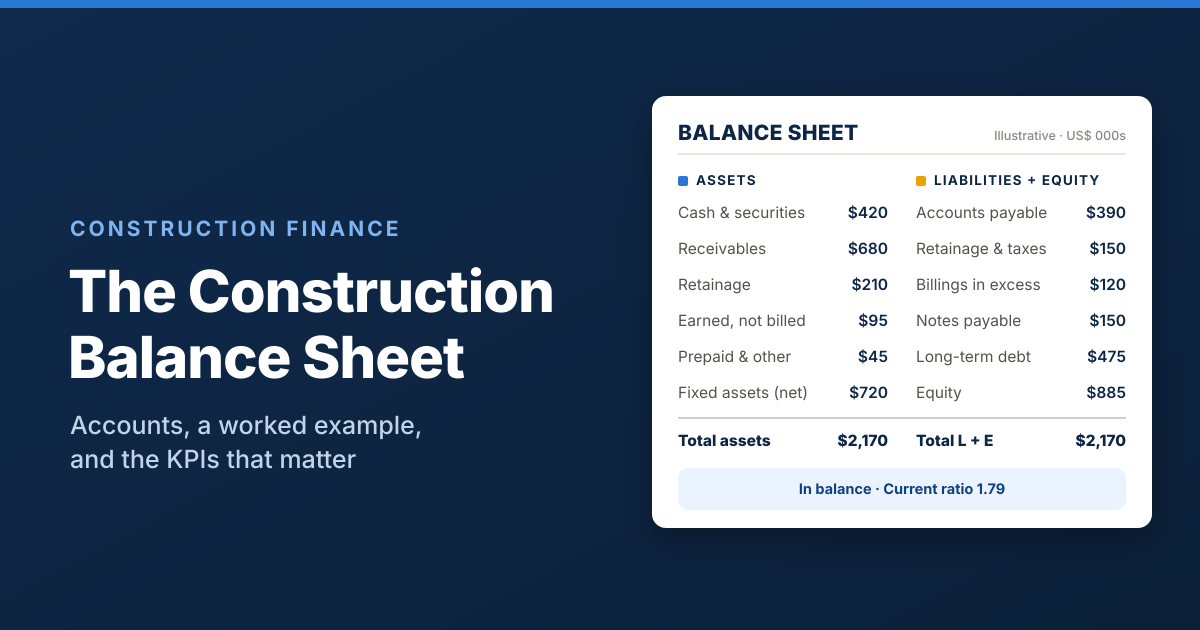
Balance Sheet Basics for Construction Industry Professionals
Profitable on paper but still short on cash? The answer is usually on your balance sheet. This guide breaks down every account on a construction balance sheet, from retainage to earnings in excess of billings, with a full worked example and the KPIs sureties watch, so you can see exactly where your money is tied up and whether your company is financially healthy.
Read →
Top Construction Accounting Software Options for Contractors
Construction accounting software helps contractors manage job costing, cash flow, payroll, and profitability across projects. Popular options include Acumatica, CMiC, COINS, ComputerEase, Foundation, Jonas Premier, QuickBooks, Sage 100 Contractor, Sage 300 CRE, Sage Intacct, Spectrum, and Vista. The best fit depends on company size, workflows, and growth goals.
Read →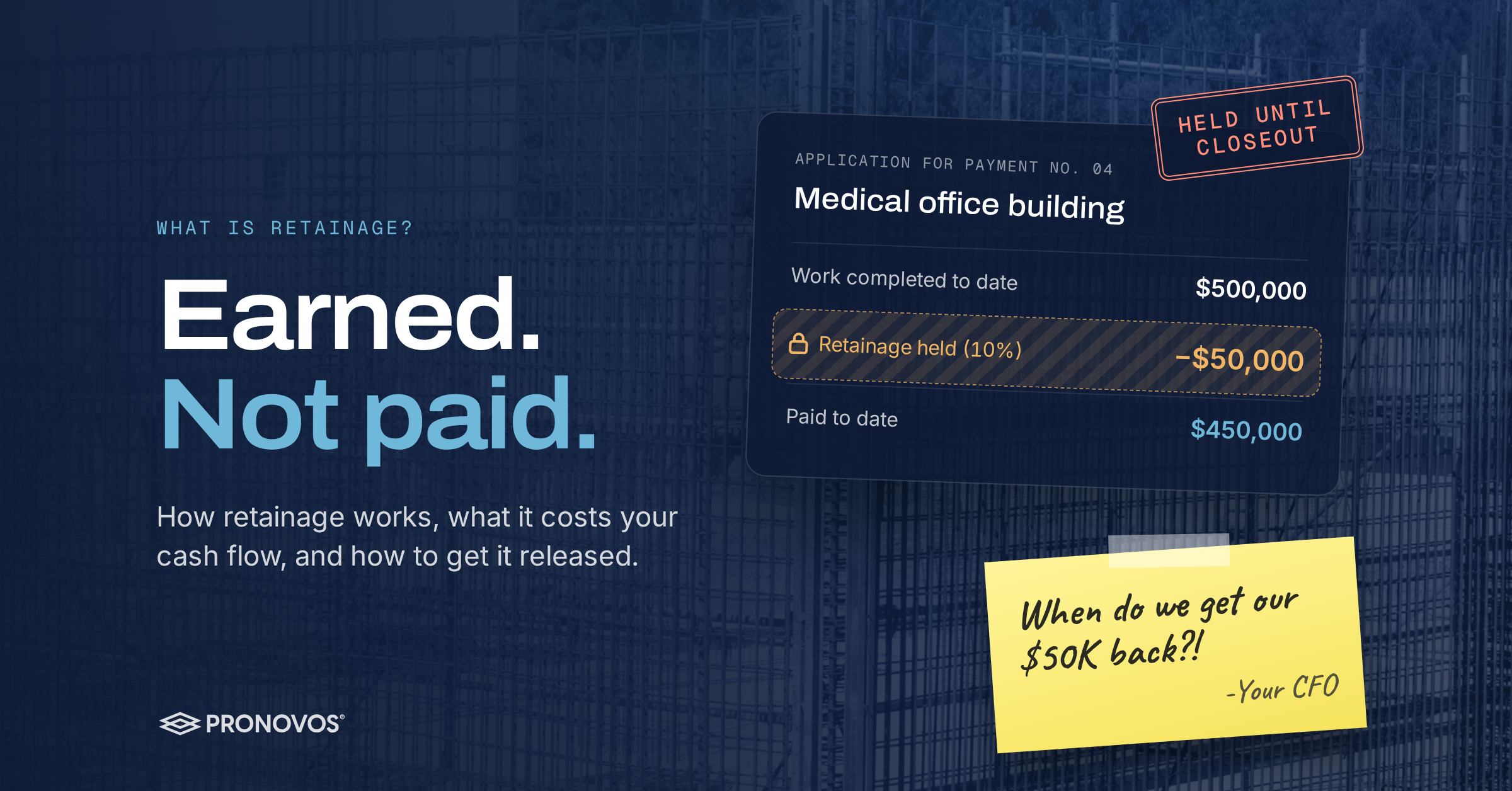
What is retainage in construction?
Retainage is the 5% or 10% of each progress payment held back until a job is finished. Here is how it is calculated, a worked pay app example, why it hits contractor cash flow, and the mistakes that leave money on the table.
Read →
We Heard It From the CPAs: Their Honest Take on AI
We asked construction CPAs from Accounting Today’s 2026 Top 100 where AI is genuinely working for their contractor clients. They converged on five points: AI lands first in the back office (AP, invoices, reporting), false confidence is the real risk, AI accelerates analysis but never decides, data quality is the gate, and the fix is unglamorous: timely closes and clean job-cost coding.
Read →
Celebrating Our Construction CPA and Business Advisory Partners For Making Accounting Today’s 2025 Top 100 Firms List
At ProNovos, we take great pride in collaborating with industry-leading construction CPAs and Business Advisory firms that are dedicated to delivering top-tier financial expertise to their clients
Read →
Construction Income Statement: A Line-by-Line Guide
An income statement is a financial report that summarizes a company's revenues, expenses, and profit or loss over a set period, such as a month, quarter, or year. It follows one core formula: Income minus Expenses equals Net Profit (or Loss). For contractors, it shows whether completed projects actually made money after direct costs and overhead.
Read →