fbpx

Published July 9, 2026 . 4 mins read

Building Your Own AI Financial Tool? Here’s What Contractors Are Missing

AI made it look easy. Point a model at your ERP, ask it to pull WIP, forecast, and cash flow into one view, and you have a financial intelligence tool. That is the pitch a lot of contractors are hearing right now, whether it is coming from an internal IT team eager to prove its value or a consultant promising a custom build in a matter of weeks.

The idea is appealing. The execution is where things fall apart. We hear about it on nearly every discovery call, and the same handful of issues keep showing up. So the question you’re probably asking yourself is, should I buy or build an AI financial tool?

Bruce Orr
CEO,
ProNovos

The data doesn’t always go back where it came from

One contractor brought in a consultant to build exactly this kind of tool. It worked until the data synced back to the ERP and created duplicates. Now their controller is reconciling two versions of the same draw requests and pay apps instead of one, which defeats the entire point of the project.

ERPs like Foundation, Sage 300 CRE, Sage 100 Contractor, and Sage Intacct were not built with open, easy two-way sync in mind. Getting data out is one problem. Getting it back in cleanly, without creating duplicate records or breaking downstream reports, is much harder. A tool that only solves half of that equation creates more reconciliation work than it saves.

Anyone can build it. Not everyone can build it right

Low-code platforms and AI copilots have made it possible for almost anyone to stand up a dashboard or a data pipeline. But building something that runs is different from building something that holds up.

Do you understand the structure underneath your financial data? How retainage, WIP, AR aging, and bonding capacity actually relate to each other inside your specific chart of accounts? A tool built without that structural understanding might look right on the surface and still be wrong in ways that only surface when a bank or surety asks a hard question about the numbers.

Execution is the entire game here. The build is the easy part. Getting it right is what determines whether you can trust it.

A build is not a finish line

Whoever builds this tool must secure and maintain it indefinitely. That means every ERP update, every API change, every new integration point is now something your team is responsible for keeping in working order.

This is not a one-time project with a clean end date. It is an ongoing commitment, and it usually lands on whoever has the least room for it: an IT team already stretched across other priorities, or a controller who now owns a piece of software on top of closing the books.

Do you want to be a construction company or a tech company?

This is the question that tends to cut through the noise fastest. Every hour your team spends debugging a sync error, patching a security gap, or rebuilding a report that broke after an ERP update is an hour not spent on the actual construction business: bidding work, managing backlog, keeping crews in the field.

A few other things worth weighing before committing internal resources to this kind of build:

Access and governance

Financial data touching your ERP, your bank, and potentially a factoring or payment partner needs clear controls around who can see and change what. That is a real security surface to maintain, not a checkbox.

Audit trail and compliance

Banks and sureties closely evaluate the numbers behind your bonding capacity and line-of-credit utilization. A homegrown tool needs to produce data that holds up to that scrutiny, not just data that looks clean in a dashboard.

Key person risk

If one person built and understands the integration, what happens when they leave? Internal builds often live and die with the person who created them.

Scalability

A tool built for your current backlog may not hold up as project volume, size, or complexity grows. Rebuilding an integration mid-growth is a worse time to discover its limits.

AI reliability with financial data

AI models are good at surfacing patterns, but they were not built to catch a rounding error in a draw request or a broken link between WIP and cash flow before it hits your reporting. In other industries, small AI-generated logic errors in financial calculations have led to real dollar losses and compliance headaches. Financial reporting still needs human review and clear audit trails behind every number, not just a confident-looking output.

What data are you actually feeding it?

Building a tool that touches your ERP, your bank feeds, and your customer or vendor records means that sensitive financial data passes through whatever AI model or platform sits in the middle. Bank account numbers, routing information, and anything tied to an individual’s identity need a clear answer for where that data goes, who can access it, and how it is secured before it ever gets fed into a prompt.

Vendor and platform dependency

A tool built on top of a single AI provider or platform inherits that provider’s risk. Model changes, pricing changes, rate limits, or an outage at the worst possible time (think bid day or draw request deadline) become your problem too. That is a dependency most construction companies never intended to take on.

Total cost of ownership

The build might look free because it uses existing staff time, but that time has a real cost, and it rarely gets tracked the same way a software subscription does.

None of this means AI-powered financial tools are a bad idea. The opposite, actually. It means the build, security, and maintenance of that tool are specialized jobs in their own right, ones most construction companies did not get into this business to do.

This is what Nova is built for

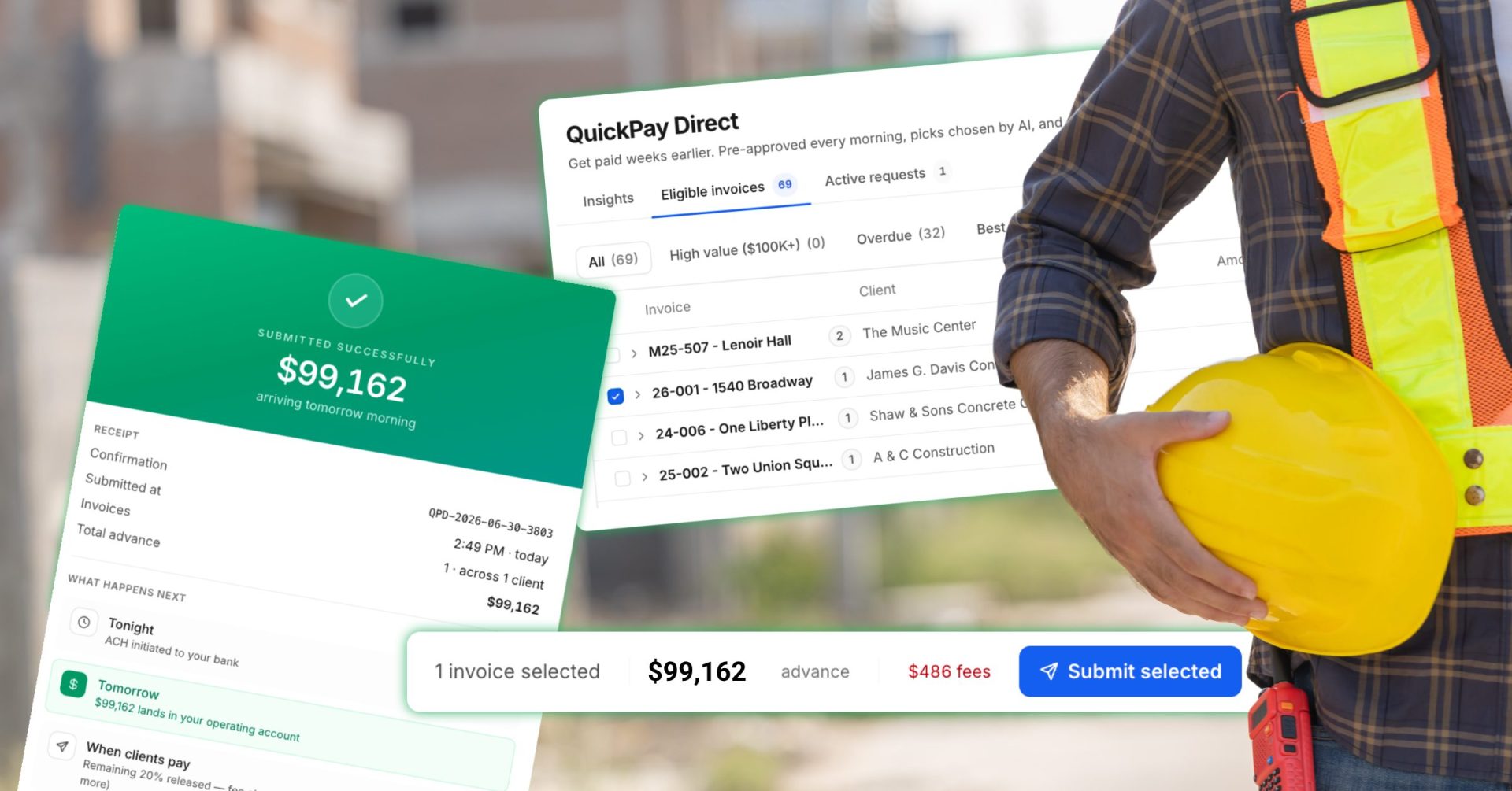
Nova by ProNovos is an affordable financial intelligence platform built specifically for contractors, with years of experience connecting to ERPs such as Foundation, Acumatica, ComputerEase, QuickBooks Online, Vista, Spectrum, Sage 300 CRE, Sage 100 Contractor, and Sage Intacct, and securing the financial data that flows through them. We handle the building, the maintenance, and the security. You focus on the financials and on running the construction company you actually set out to build.