
Good vs. Bad Working Capital in Construction Finance
Not all working capital is created equal. Working capital keeps construction businesses alive, but not all working capital works for you. A contractor can show $1 million in working capital on paper


Not all working capital is created equal. Working capital keeps construction businesses alive, but not all working capital works for you. A contractor can show $1 million in working capital on paper yet still struggle to make payroll. The difference lies in the quality and liquidity of those assets.
When bonding companies, sureties, banks, and CPAs review your financials, working capital is one of the first areas they analyze. It directly influences your bonding capacity, access to lines of credit, and the feedback you receive from financial partners. Strong, reliable working capital signals stability and discipline. Weak or illiquid capital can raise red flags and limit your ability to grow.
For construction finance leaders, understanding the composition of working capital, not just its amount, is essential to building lender confidence, maintaining bonding capacity, and ensuring long-term financial strength.
 John O'Bryan
Growth Manager
The Reality of Financial Understanding the Core Metrics Behind Working Capital
Healthy working capital management begins with knowing your numbers. These KPIs give you the visibility needed to track liquidity, performance, and your ability to meet short-term obligations.
Gross Working Capital
Definition
The total value of a company’s current assets.
Formula
Gross Working Capital = Current Assets
Includes
Cash, accounts receivable, inventory, short-term investments, and prepaid expenses.
Use case
Shows the size of short-term assets but doesn’t reveal whether you can actually meet obligations.
Net Working Capital
Definition
The difference between current assets and current liabilities.
Formula
Net Working Capital = Current Assets – Current Liabilities
Use case
Shows the size of short-term assets but doesn’t reveal whether you can actually meet obligations.
Analogy
If gross working capital tells you how much cash you have, net working capital tells you how much is left after you pay your bills.
Working Capital Ratio (Current Ratio)
Measures your ability to pay short-term obligations using current assets.
• A ratio above 1.0 indicates more assets than liabilities.
• Strong contractors aim for 1.3–1.5 or higher, depending on their risk tolerance.
• Below 1.0 suggests potential liquidity struggles.
This is the first number sureties and lenders review, a snapshot of your ability to stay on your feet if something goes sideways.
Days Sales Outstanding (DSO)
Shows how long it takes to collect payment after an invoice is issued. A high DSO means cash is tied up in receivables, slowing down operations and payroll.
Tip: Payment programs like QuickPay can eliminate uncertainty, ensuring subcontractors get paid faster and projects stay on schedule.
Days Payable Outstanding (DPO)
Tracks how long it takes you to pay suppliers. Extending DPO can preserve cash, but pushing it too far may hurt supplier relationships.
Cash Conversion Cycle
Combines DSO, DPO, and inventory days (if applicable) to show how fast cash moves through your business. The shorter the cycle, the healthier your liquidity.
Backlog-to-Working Capital Ratio
Shows whether your capital can support your future workload. A high ratio signals you might be taking on more work than your finances can handle. You can’t stop bidding altogether, but you have to be smart about timing. If backlog is strong, bid on projects that fill schedule gaps or have later start dates.
Fixed Charge Coverage Ratio
Indicates your ability to meet fixed financial obligations (debt, leases) with current earnings, key to maintaining a line of credit. 1.25 is often the minimum, but hitting the floor doesn’t mean you’re on solid ground. Lenders watch this quarterly, and missing the mark can impact your ability to borrow.

Expert Insight: How Sureties View Your Financials
Featuring Ryan Otwell, MBA, AFSB, CPCU, Surety Bonding Advisor at Sutter, McLellan & Gilbreath
In this video, Ryan Otwell explains how sureties evaluate contractors’ working capital and WIP reports to gauge financial strength and bonding capacity.
What is the Difference Between Good and Bad Working Capital?
Not all working capital is equal. While the formula, Current Assets minus Current Liabilities, is simple, the quality of those assets tells the real story.
Good Working Capital
• Cash reserves and reliable liquidity
• Receivables that turn quickly
• Reasonable underbillings due to timing
• Transparent supplier terms
These assets are liquid and dependable, building trust with sureties and lenders.
Bad Working Capital
• Slow or doubtful receivables
• Excessive underbillings tied to project or billing issues
• Little or no cash on hand
• Assets sureties discount, such as shareholder receivables or heavy prepaids
Even if two contractors show the same dollar amount of working capital, the one with more liquid, trustworthy assets will always appear stronger to a lender.
Behavior
Receivables
Cash
Underbillings
Supplier Terms
Asset Mix
Good Working Capital
Collected within 45 days
Maintained as a liquidity buffer
Due to timing
Liquid and reliable
Managed with transparency
Bad Working Capital
Stretched past 90 days
Minimal or none
Due to job or billing issues
Heavy in prepaids or shareholder receivables
Repeatedly stretched
Turning Bad Working Capital into Good
Even the most disciplined firms can fall out of balance. The key is to manage liquidity intentionally:
• Accelerate collections. Shorten DSO by tightening billing cycles and offering quick pay options.
• Monitor project billing. Address underbillings quickly before they compound.
• • Revisit payables strategy. Extend terms only as long as trust remains intact.
• Preserve cash reserves. Maintain a buffer for volatility.
• Leverage tools and data. Use analytics platforms to forecast liquidity and model stress scenarios.
Forward-thinking contractors treat working capital as a living system, one that evolves with market conditions and project timing.
Common Questions About Working Capital in Construction
What is good working capital in construction?
Good working capital consists of liquid, reliable assets such as cash, fast-turning receivables, and reasonable underbillings. It shows that your company can meet short-term obligations, maintain bonding capacity, and operate with financial confidence.
What is bad working capital?
Bad working capital includes slow or doubtful receivables, heavy underbillings, or assets that sureties and lenders may discount. Even if the numbers look strong on paper, illiquid or unreliable assets can weaken your balance sheet and restrict growth.
How can contractors improve bad working capital?
Accelerate collections, manage billing discipline, preserve cash reserves, and use data analytics to forecast liquidity. Early payment programs like QuickPay and accurate reporting can also strengthen cash flow and lender confidence.
Why does working capital matter to bonding companies and lenders?
Sureties, banks, and CPAs use working capital to assess financial health and determine bonding capacity, loan eligibility, and credit terms. Strong working capital demonstrates stability and discipline, while weak capital can limit access to financing.
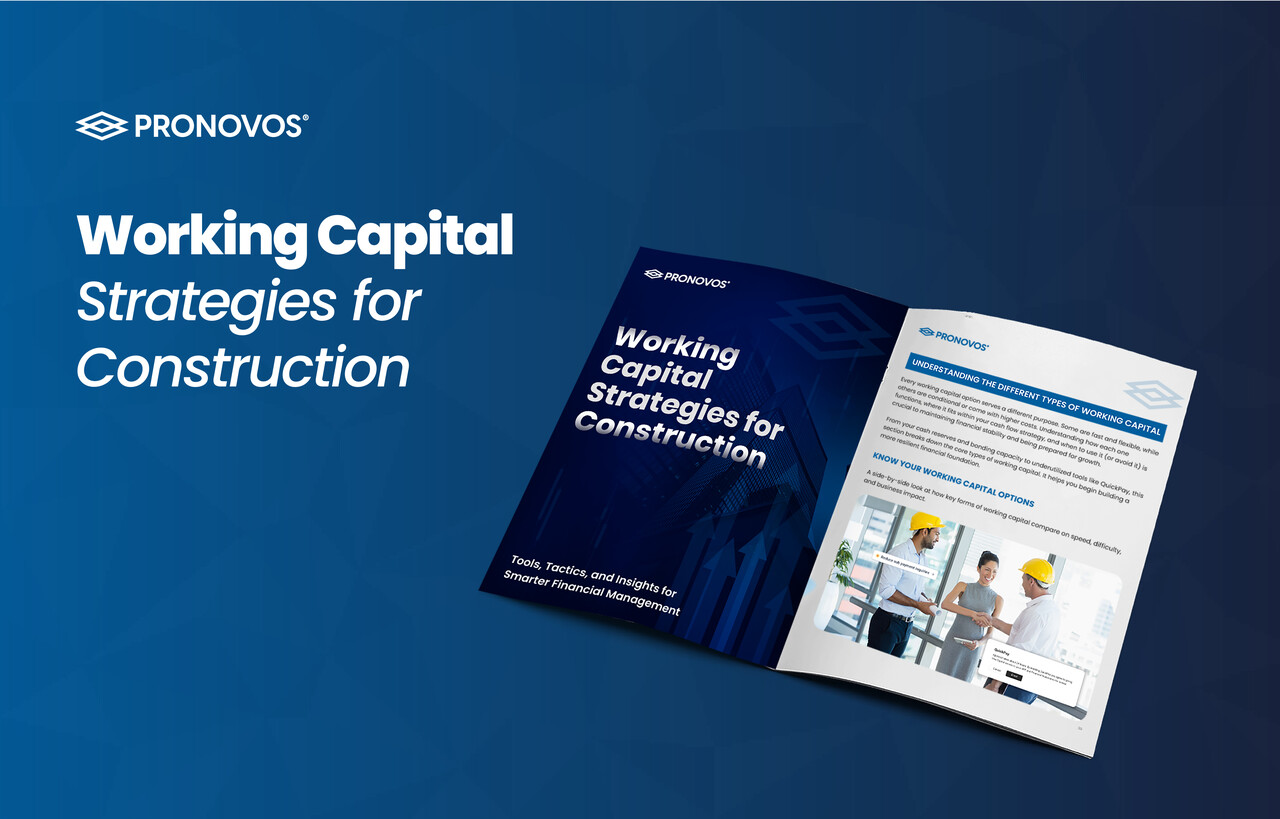
Download the free eBook: Working Capital Strategies for Construction Businesses
Want a deeper dive into how leading contractors manage liquidity and strengthen balance sheets? This eBook explores real-world tactics from CFOs, controllers, and financial partners to help you optimize project timing, forecast cash flow, and build a stronger capital foundation.
Next Steps
When the economy tightens and projects slow, strong working capital is what keeps your business standing. But liquidity isn’t just about how much cash you have; it’s about how quickly you can access it. QuickPay powered by ProNovos helps contractors close that gap, turning completed work into available cash so you can meet payroll, pay subs on time, and take on the next project with confidence.
If you’re ready to make your working capital work harder for you, explore how QuickPay gives construction businesses the flexibility and control they need to grow stronger. Learn more at pronovos.com/quickpay