fbpx

Published May 13, 2026 . 0 min read

Mo’ Money Mo’ Problems for Subcontractors

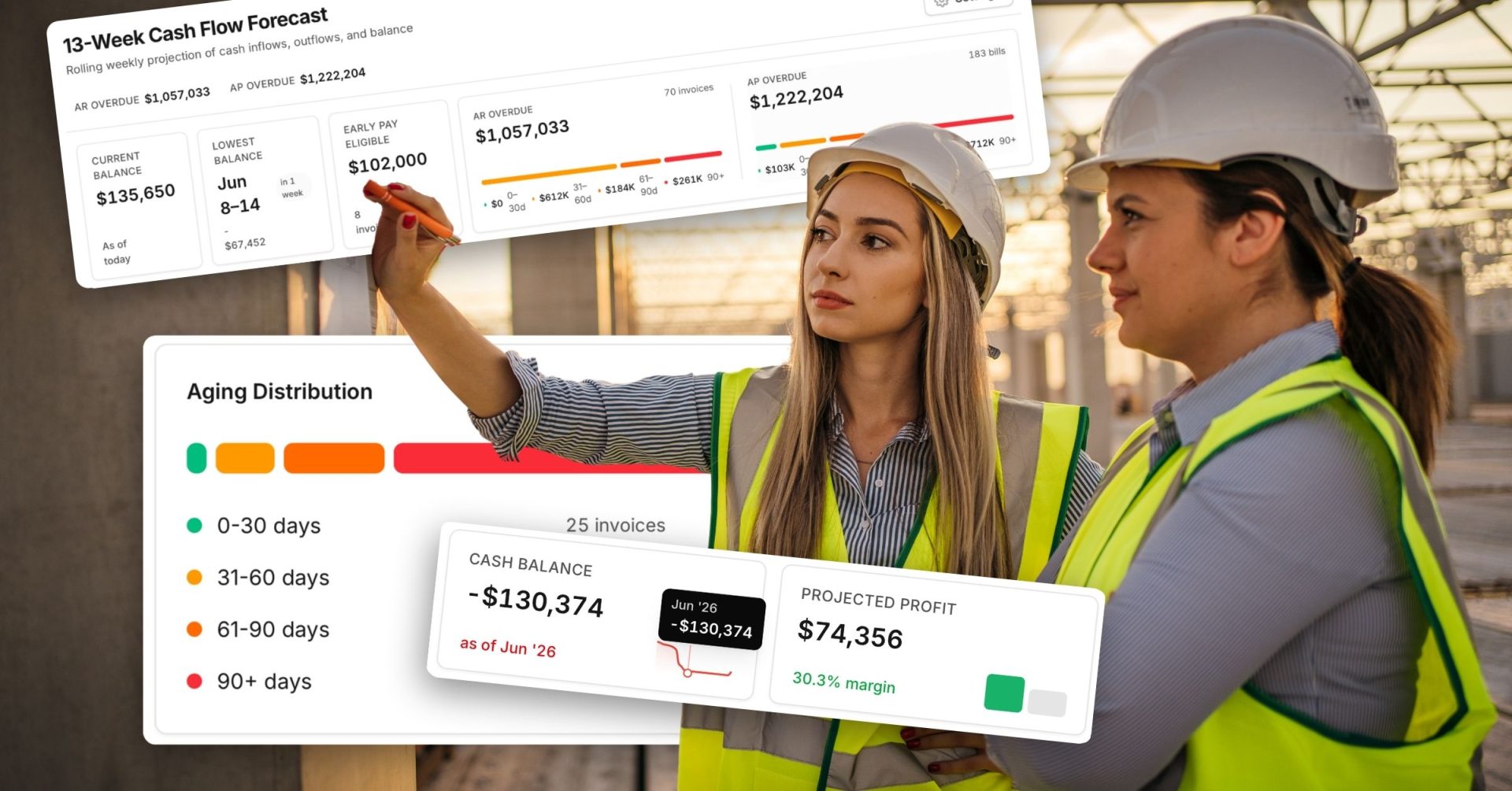
Growth is supposed to fix your cash flow problems, right? More revenue, more runway. That’s how it works in almost every other business. But ask any subcontractor who has doubled their project load in the last two years, and you will hear a different story.

The bigger you get, the harder it hits. More projects mean more payroll going out every Friday. More materials ordered, more crews mobilized, more money walking out the door before a single payment walks back in. The gap between what you spend and what you collect does not shrink as you grow. It widens.

This is not a cash flow problem that better management fixes. It is a structural problem built into how construction gets paid.

60–90 days

the average time a subcontractor waits for payment after completing work

Samantha Lake
COO, ProNovos

The Growth Trap

Most subcontractors hit a wall somewhere between $5M and $20M in revenue. They land bigger contracts. They hire more people. They buy more equipment. And then they look at their bank account and wonder why it feels tighter than it did when they were half the size.

The answer is simple math. A $500K project has a different cash demand than a $2M project. When you are running three of them at once, you are fronting labor and materials across all three before you have collected on any of them. Your line of credit, if you have one, is either tapped or tied to collateral you may not be able to access quickly.

Meanwhile, the GC is operating on its own payment cycle. Net 30. Net 60. Sometimes longer, because pay-when-paid clauses push your payment window out every time an owner is slow. None of that is your fault. All of it is your problem.

Subcontractor cash flow problems are not a sign of poor financial management. They are a predictable consequence of how the construction industry structures payment. The bigger the project, the longer the cycle, and the more capital a subcontractor has to carry on their own.

Growth does not solve cash flow. It raises the stakes.

What Early Payment Actually Does

The traditional advice is to better manage your receivables. Send invoices faster. Follow up sooner. Tighten your contract terms. All of that is correct, and none of it changes the fundamental timing mismatch built into construction payment structures.

Early payment changes the math. When you can collect on a completed invoice in days instead of weeks, you stop using your own cash to bridge the gap. You stop borrowing to make payroll on a job you already finished. You stop turning down the next opportunity because you do not have the cash to mobilize.

The discount you pay to access early payment might not be cheaper than a line of credit. But cost is not the only thing on the table. You get speed and certainty. You know exactly when the money hits your account. You are not waiting on your banker to approve a higher limit. And because it is not debt, your surety never sees it. Your bonding capacity stays intact. It scales with your invoices, not your balance sheet.

Early payment programs for subcontractors work differently from traditional financing. There is no loan. There is no application based on your credit score or years in business. The invoice itself serves as collateral, making it accessible to subcontractors at almost any stage of growth.

What is QuickPay Direct?

QuickPay Direct is ProNovos’s spot factoring solution for subcontractors. Submit an invoice, get paid fast — no loans, no credit requirements based on your balance sheet.

Learn how it works →

Built for the Sub Who Cannot Wait

QuickPay Direct was built for exactly this situation: subcontractors whose GCs do not offer an early payment program, who need access to their money now, and who do not want to deal with the friction of traditional invoice financing.

You submit an invoice. You get paid quickly. The GC eventually pays the full amount, and the transaction is settled. No long applications. No credit requirements based on your balance sheet. Your creditworthiness is the strength of the invoice itself, which means the larger and more creditworthy the GC, the better it works for you.

Subcontractors using early payment tools like QuickPay Direct are not doing it because they are struggling. They are doing it because they are growing and have figured out that waiting 60 to 90 days to get paid for work you already completed is not a strategy. It is a risk.

More projects should mean more momentum. QuickPay Direct is built to make sure the money keeps up.

Stop waiting on the money you already earned.

Schedule a working capital session to see how subcontractors are integrating QuickPay Direct into their financial strategy.

Schedule a Working Capital Session