

 Samantha Lake
COO, ProNovos
Published June 17, 2026 . 0 min read
What We Heard at CFMA 2026 (and What It Means for Construction Finance)
Events

If you stopped by our booth this year, you probably remember the claw machine. But the people who stuck around weren't there for the prizes. They were there because something clicked for them, whether it was learning about Nova for the first time or realizing that construction early payment solutions like QuickPay and QuickPay Direct were something they hadn't known they needed.
"This year's conference was our most successful yet -- and I don't think that's a coincidence."
It reflects something I'm seeing across the industry: contractors are running their businesses differently now.
The slow payment problem isn't going anywhere
The first thing I noticed was how much interest QuickPay Direct was getting from subcontractors, and how surprised many of them were that spot factoring on invoices was even an option. They were even more surprised to hear that our clients are not using it as a lifeline but as a growth strategy.
CM Red, a growing subcontractor, is using QuickPay Direct to strategically scale its business. Another client, a steel fabricator, uses it to buy steel in bulk at better prices. These aren't distress stories. They're smart business decisions.
And the need is real. According to the 2025 National Subcontractor Market Report, a survey of more than 800 construction professionals found that subcontractors typically wait 56 days for payment. That's 25% longer than the 45-day DSO recommended by construction cost accountants for healthy cash flow and credit management. The practice of tying sub payments to GC payments has become standard, and as end users take longer to pay, the gap continues to widen.
56
days
Average wait time for subcontractor payment
45
days
Recommended DSO for healthy cash flow
The downstream effects go well beyond any one sub's balance sheet.
✓
Higher financing costs -- slow payments force subs to borrow to cover gaps, raising their cost of capital.
✓
Missed deadlines -- cash shortfalls make it harder to keep crews on-site and materials flowing.
✓
Inflated future bids -- subs price payment risk into their numbers, raising project costs for everyone.
✓
Fewer bids from qualified subs -- many now factor a GC's payment history into whether they bid at all.
That's why we were equally glad to see the interest from general contractors around our QuickPay program. In a market where material costs remain elevated, tariff policies keep shifting, and labor is still hard to find, giving subs an early payment option isn't just good for the sub. It's good for the GC's ability to attract qualified partners and keep projects moving.
AI is on everyone's mind, but the gap between experimenting and executing is wide
We had a lot of great conversations about AI at the conference, and I was genuinely excited to see how many contractors are already experimenting with tools like Claude, Gemini, and ChatGPT. Vibe coding is having a moment, and I get it.
But here's the thing: anyone can vibe code. Maintaining a secure, construction-specific solution built on top of that is a different conversation entirely.
This tracks with what the broader industry is finding. A survey of more than 2,200 companies worldwide conducted by the Royal Institution of Chartered Surveyors found:
The hesitation makes sense. Construction is a risk-averse industry, and the questions around data security, integration, and workforce readiness are legitimate. But the firms that figure this out first will have a real advantage.
That's exactly why we built Nova
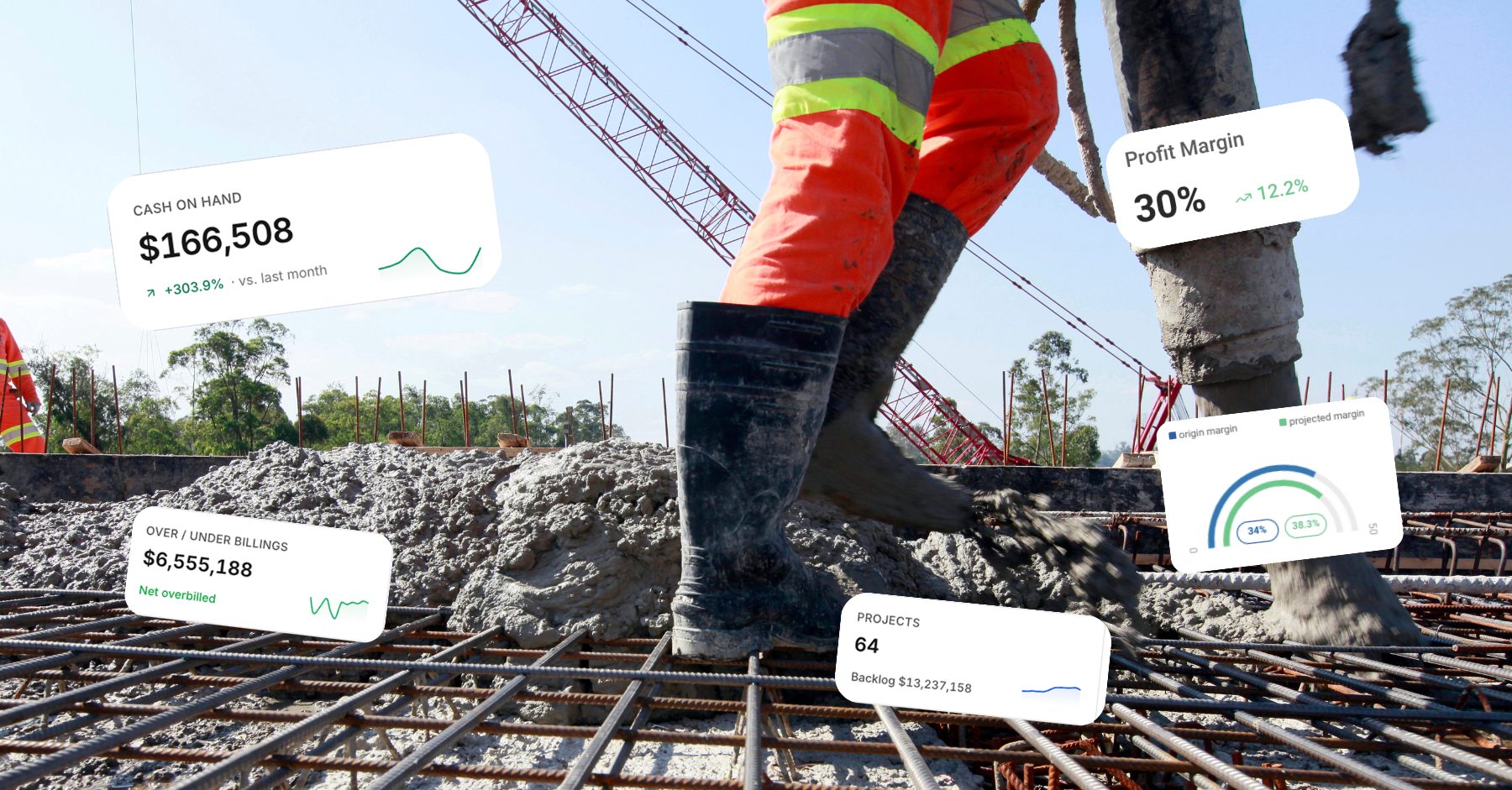
Nova has all the functionality our users rely on from our Financial Intelligence platform, layered with agentic workflows and AI agents that give overworked construction financial professionals a genuine second set of hands on the work that eats up their time. And it lowers the barrier for project managers to engage with their own job financials.
No more needing to know construction financial lingo to find out where a job stands. A PM can log in, ask Nova a plain English question, see exactly where their jobs are, and tell Nova to draft and send follow-up emails to clients with outstanding invoices.
That's not a future state. That's what Nova does now.
The takeaway
The construction industry in 2026 is in transition. Costs are elevated, labor is tight, and the macro environment is uncertain. But demand is holding, backlogs are healthy, and the firms leaning into technology and smarter financial tools are finding ways to grow through it.
We left CFMA more energized than ever, and genuinely grateful for every conversation. If we didn't get a chance to talk, we'd love the opportunity to learn more about you and your business.