fbpx

Published June 30, 2026 . 0 min read

Construction Invoice Factoring: A Complete Guide for Specialty Subcontractors

If you’re a specialty subcontractor, you already know the problem: you mobilize crews, buy materials, and carry payroll for weeks, sometimes months, before a payment lands in your account. Retainage holds back 5 to 10% of every billing. Pay-when-paid clauses push your timeline to whenever the owner pays the GC. And the bigger the project, the longer the gap.

Construction invoice factoring is one of the most widely used tools for bridging that gap. This guide explains how it works, what it costs, and critically, what specialty subcontractors specifically need to evaluate before choosing a factoring solution.

What Is Construction Invoice Factoring?

Construction invoice factoring is a financing method where a contractor sells an outstanding invoice to a third-party factoring company in exchange for immediate cash. Instead of waiting 30, 60, or 90 days for a GC or owner to pay, you receive most of the invoice’s value upfront. The factoring company then collects payment directly from your customer and releases the remaining balance, minus its fee.

It is not a loan. No debt appears on your balance sheet, and your credit score is not the primary approval factor. The creditworthiness of your customer (the GC or project owner) is what matters most to the factoring company.

Invoice factoring is used across many industries, but construction has its own set of dynamics: progress billing, retainage, lien rights, and pay-when-paid clauses. That makes it worth understanding how factoring applies specifically to this industry.

How Construction Invoice Factoring Works

The basic process follows a consistent pattern across most factoring companies:

1

Complete the work and submit your invoice

You perform work on a project and send an invoice to your GC or owner.

2

Submit the invoice to the factoring company

You sell the invoice to the factor before it’s due.

3

Receive an advance

Types of Construction Invoice Factoring

Understanding the different types of factoring helps you choose the right structure for your business.

Recourse vs. Non-Recourse

Lower fees
Recourse factoring You retain responsibility if your customer doesn't pay. Risk stays with you, so fees are lower.
VS Higher fees
Non-recourse factoring Risk transfers to the factor if your customer defaults. More protection, but at a higher cost.

Most construction factoring is recourse-based, given the complexity of payment chains and the prevalence of pay-when-paid clauses.

Spot vs. Whole-Turnover

Flexible
Spot factoring Choose which invoices to sell, case by case. No obligation to submit all receivables.
VS Commitment required
Whole-turnover factoring All invoices for a customer or project go to the factor. Default at most traditional factoring companies.

For subcontractors who want flexibility, spot factoring is the more attractive option. You use it where it helps, and leave it alone where it doesn't.

Progress Billing Factoring

Some construction-specialized factoring companies will also factor progress payments: the partial billings that subcontractors submit as work advances. This is particularly useful on large, long-duration projects where you can't wait until substantial completion to generate cash flow.

John O’Bryan
Marketing Manager

Construction Invoice Factoring Costs

Factoring companies charge a fee rather than interest, since this is a sale of receivables rather than a loan. Fees are typically expressed as a percentage of the invoice’s total value.

Standard range: 1 to 5% of invoice value. Faster-paying customers with strong credit fall toward the lower end. Slower-paying customers, higher-risk projects, or overdue invoices trend toward the higher end.

How fees scale with collection time

Within 15 days

1.5%

~1.5%

Within 30 days

2.5%

~2.5%

Within 45+ days

3.5%+

~3.5%+

High-risk invoices

up to 5%

up to 5%

$15,000
1.5% fee on $1M monthly billing
$50,000
5% fee on $1M monthly billing

Additional fees to watch for

01

Setup or onboarding fees

Charged once to establish your account with the factoring company.

02

Monthly minimum fees

Charged if your factoring volume falls below a set monthly threshold.

03

Lockbox fees

Charged for processing incoming payments through the factor’s lockbox.

04

Service or maintenance fees

Ongoing access charges for using the factoring platform or facility.

Always request a full fee schedule, not just the headline factoring rate, before signing any agreement.

Advantages of Construction Invoice Factoring

Faster access to working capital

Rather than waiting 60 to 90 days for payment, you can have most of an invoice’s value within 24 to 48 hours. That cash can go toward labor, materials, or the startup costs of a new project.

No debt on your balance sheet

Because factoring is a sale of receivables, not a loan, it doesn’t appear as a liability. Your debt-to-equity ratios stay clean, which matters when pre-qualifying for bonded work.

Approval based on customer credit, not yours

If you’re a newer or growing company without a long credit history, factoring can be more accessible than a bank loan. The factor is underwriting your GC or project owner, not you.

Supports growth without overleveraging

Taking on a large new project requires cash to mobilize. Factoring provides that cash from existing receivables rather than requiring you to draw down a bank line or take on new debt.

Outsourced collections

The factoring company takes over the work of following up on payment, freeing up your team.

Disadvantages of Construction Invoice Factoring

Your customer will be contacted

In traditional factoring, the factor notifies your customer directly through a notice of assignment. Some GCs view this negatively, particularly when the relationship is sensitive or competitive.

Whole-turnover requirements limit flexibility

Many factoring agreements require you to submit all invoices for a given customer or project. If you only need occasional liquidity, being locked into a high-volume commitment can be inefficient.

Blanket lien filings can complicate your banking

Some factoring companies require a UCC-1 blanket lien on your receivables. If your bank already holds a first-lien position on those assets, this can create conflicts or restrict your borrowing capacity.

Not all invoices qualify

Factors typically require invoices to be free of liens, disputes, or other encumbrances. Invoices to clients with poor credit histories may not be fundable.

What Specialty Subcontractors Specifically Need to Watch Out For

Most general guides to invoice factoring are written for industries where the buyer-seller relationship is straightforward. Construction is different, and subcontractors face a specific set of risks that warrant closer attention.

GC Notification

In traditional factoring, the factoring company sends a notice of assignment to your GC, informing them that payment should be directed to the factor. Some GCs are indifferent to this. Others view it negatively, interpreting it as a sign of financial instability or creating friction over dealing with a third party. If your GC relationships are competitive or carefully managed, the notification requirement is worth evaluating carefully.

Whole-Turnover vs. Spot Factoring

If a factoring company requires you to submit all your receivables or all invoices for a particular GC, you lose the ability to be selective. For subcontractors running 10, 20, or 30 pay apps per month across multiple projects, that’s a significant constraint. Look for spot factoring structures that let you choose which invoices to fund.

Impact on Your Bank Line of Credit

Some factoring companies file a blanket UCC lien that puts them in a superior position to your existing bank. This can create problems with your lender and restrict your ability to use your line of credit. Confirm the lien position any factoring company will take and whether it affects your existing banking relationship.

Collection Behavior

A factoring company that acts aggressively in collections can damage relationships you’ve spent years building. Ask how the factor handles slow-paying GCs and what their escalation process looks like. The best factoring relationships for subs are ones where the factor understands construction payment cycles and works collaboratively rather than adversarially.

How to Evaluate a Factoring Solution as a Subcontractor

Before signing with any factoring company, run through this checklist:

Spot factoring available?

Can you choose which invoices to submit, or are you required to factor all receivables?

GC notification required?

Will your GC receive a notice of assignment, and if so, what does it say?

What UCC position does the factor take?

Will their lien filing interfere with your existing bank relationship?

How does the factor handle collections?

What’s the escalation process if a GC pays slowly?

What is the full fee structure?

Beyond the headline rate: setup fees, monthly minimums, service charges?

Long-term contract or minimum volume requirement?

Are you locked in, or can you use it selectively when you need it?

Construction-specific experience?

Do they understand pay-when-paid, retainage, lien waivers, and progress billing?

How fast is funding?

Same-day vs. next-day vs. several days matters when you’re managing a tight cash window.

Featured solution

QuickPay Direct: spot factoring built for subcontractors

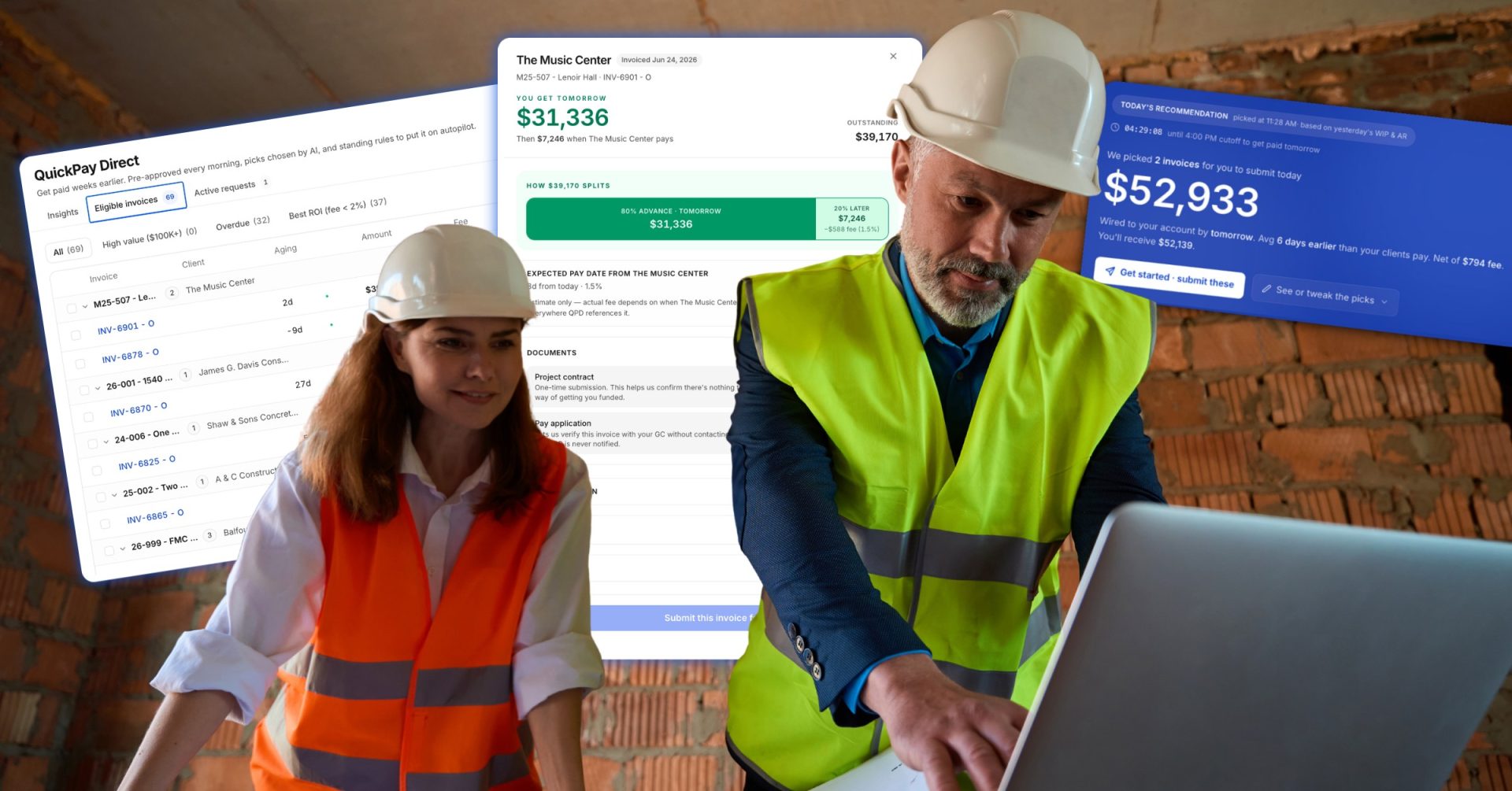
QuickPay Direct, offered through the ProNovos platform and funded by Viva Capital, is designed specifically around the concerns outlined above. It uses a spot factoring structure: subcontractors choose which invoices to fund with no obligation to submit all receivables. Viva operates without notifying the GC by default, filing only a UCC in an inferior position to preserve the subcontractor’s existing bank relationship.

1.5%
starting fee
24 to 48hr
funding
$0
upfront cost
No
long-term contract


Learn about QuickPay Direct

Getting Started with Construction Invoice Factoring

If you’re evaluating factoring for the first time, here’s a practical starting framework:

1

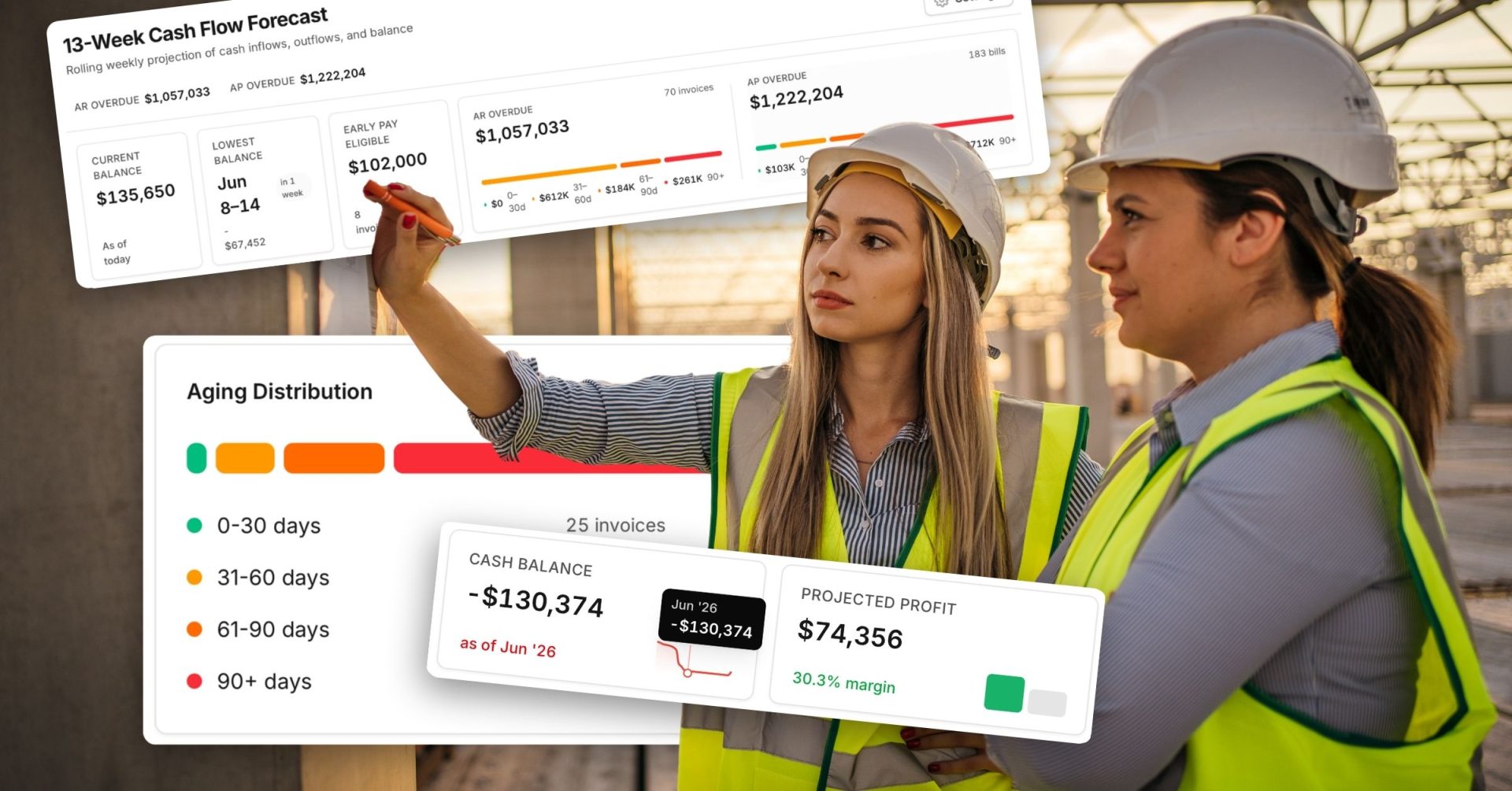
Map your cash flow gaps

Before pursuing any financing, understand where your actual pinch points are. Which projects front-load the most cost? Which GCs pay the slowest? Where are you drawing on your bank line most frequently?

2

Identify which invoices are good candidates

Look for invoices to creditworthy GCs or owners, free of disputes or liens, with payment terms of 30 to 90 days. These are the most factorable.

3

Run the math at your billing volume

Take your average monthly billing and apply a realistic factoring fee to it. Determine whether the cost is justified by the cash flow benefit at your specific scale.

4

Compare at least two or three providers

Fee structures, contract terms, and collection practices vary significantly. Get full fee schedules in writing and ask about GC notification and lien filing practices directly.

5

Start before you need it

The worst time to pursue a factoring arrangement is when you’re already in a cash crunch. Get vetted, get onboarded, and have the option available before a cash gap forces your hand.

Construction invoice factoring isn’t the right tool for every subcontractor or every project. But for specialty subs carrying high upfront costs on long-duration jobs, it’s one of the most practical ways to maintain working capital without adding debt or depleting a bank line. The key is choosing a structure that fits the