The numbers are in, and they’re not exactly reassuring.
CFMA’s latest Confindex report, a quarterly pulse check on construction financial sentiment, shows that the Financial Conditions Index declined nearly 2% in the second quarter of 2026 and is up just 1% from a year ago. That’s the smallest year-over-year gain of any index in the report. The reason? Project financing costs, already elevated, are now heading back up. Bond markets are signaling that the Federal Reserve may resume raising rates later this year and into 2027.
As economist Anirban Basu put it in the report: “Rather than declining toward pre-pandemic levels, project financing costs remain stubbornly elevated and are now on the ascent.”
For the hyperscalers funding AI data centers, this is mostly noise. They’re going to build regardless of what rates do. But for subcontractors working on multifamily, office, lodging, retail, and warehouse projects, the cost of capital matters a lot. And it filters down in ways that don’t always show up in the news.
The Question Worth Asking Before You Have To
Many subcontractors operate on a combination of cash reserves and a bank line of credit. That works until it doesn’t.
Lines of credit aren’t permanent. Banks can and do pull them back when credit conditions tighten, when your financials don’t look the way they used to, or when an institution’s own risk appetite changes. Most subcontractors don’t think about that possibility until the phone rings.
You Already Know the Payment Problem. The Data Just Makes It Official.
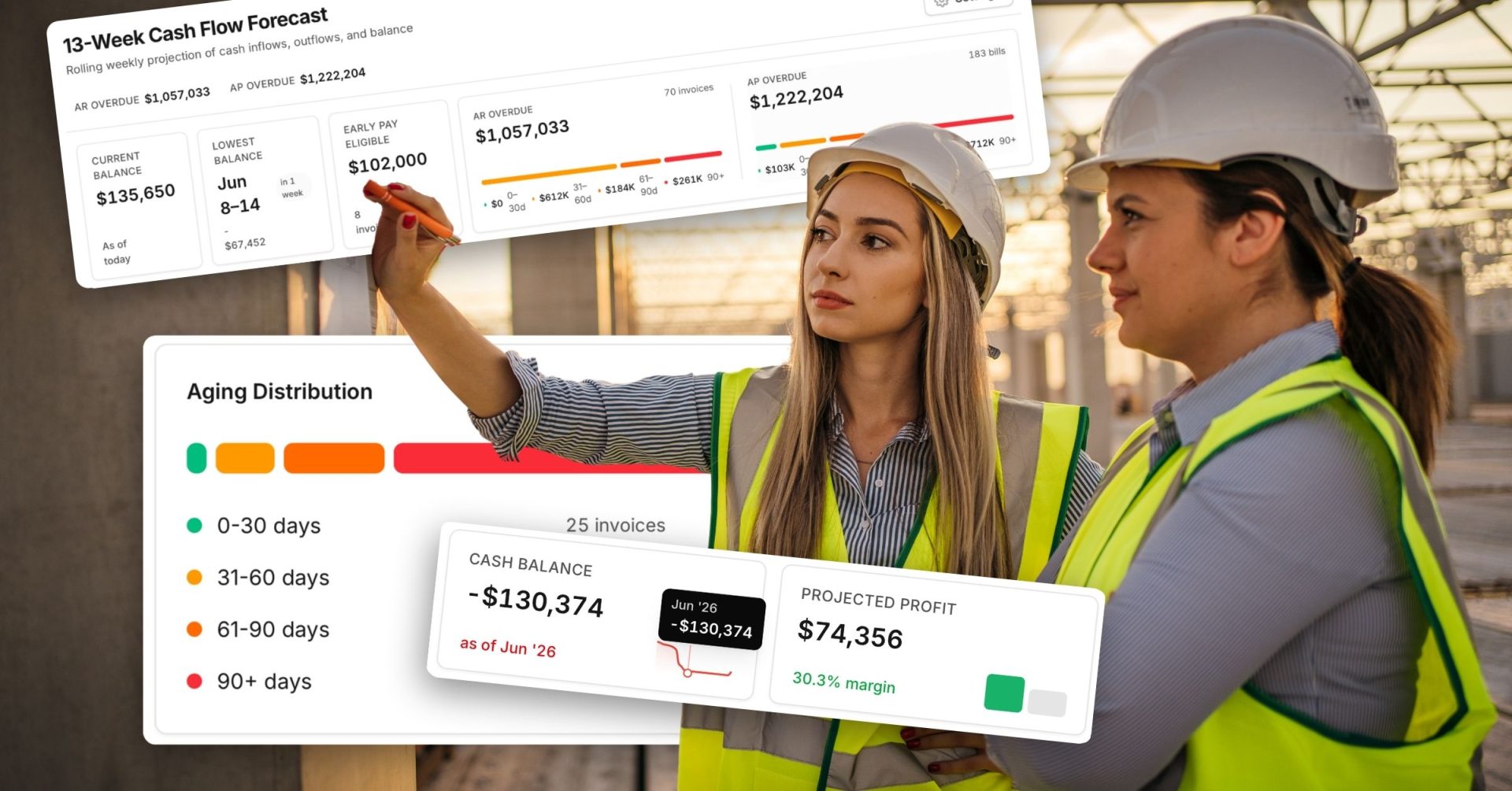
Here's what's happening on the ground, confirmed by the 2025 National Subcontractor Market Report: subcontractors wait an average of 56 days to get paid. Construction cost accountants recommend no more than 45 days outstanding to maintain healthy cash flow and credit standing. That 11-day gap doesn't sound like much until you're the one covering payroll, materials, and equipment while the clock runs.
2025 National Subcontractor Market Report
+11 days
longer than the recommended maximum to maintain healthy cash flow and credit standing
|
56 days
avg. time subcontractors wait to get paid
|
|
45 days
recommended maximum for healthy cash flow
|
That 11-day gap doesn't sound like much. But until you're the one covering payroll, materials, and equipment while the clock runs, it's easy to underestimate.
Pay-when-paid contract structures push the risk down the chain. When an owner is slow to pay a GC, the GC is slow to pay subs. That's been the dynamic for decades. But in an environment where financing costs are rising and project pipelines across several sectors are softening, the downstream pressure on subcontractors will get heavier, not lighter.
For many subs, the honest answer is: not easily.
That doesn’t mean you’re running a bad business. It means you’re running a construction business, where the S-curve of project cash flow almost guarantees that you’re spending before you’re earning, and where the people who owe you money have their own slow-pay problems upstream.
Preparing Instead of Waiting
There are two kinds of subcontractors right now. The ones who are waiting to see if rising financing costs and tightening credit actually become their problem, and the ones who are looking at the same data and deciding to strengthen their position before they have to.
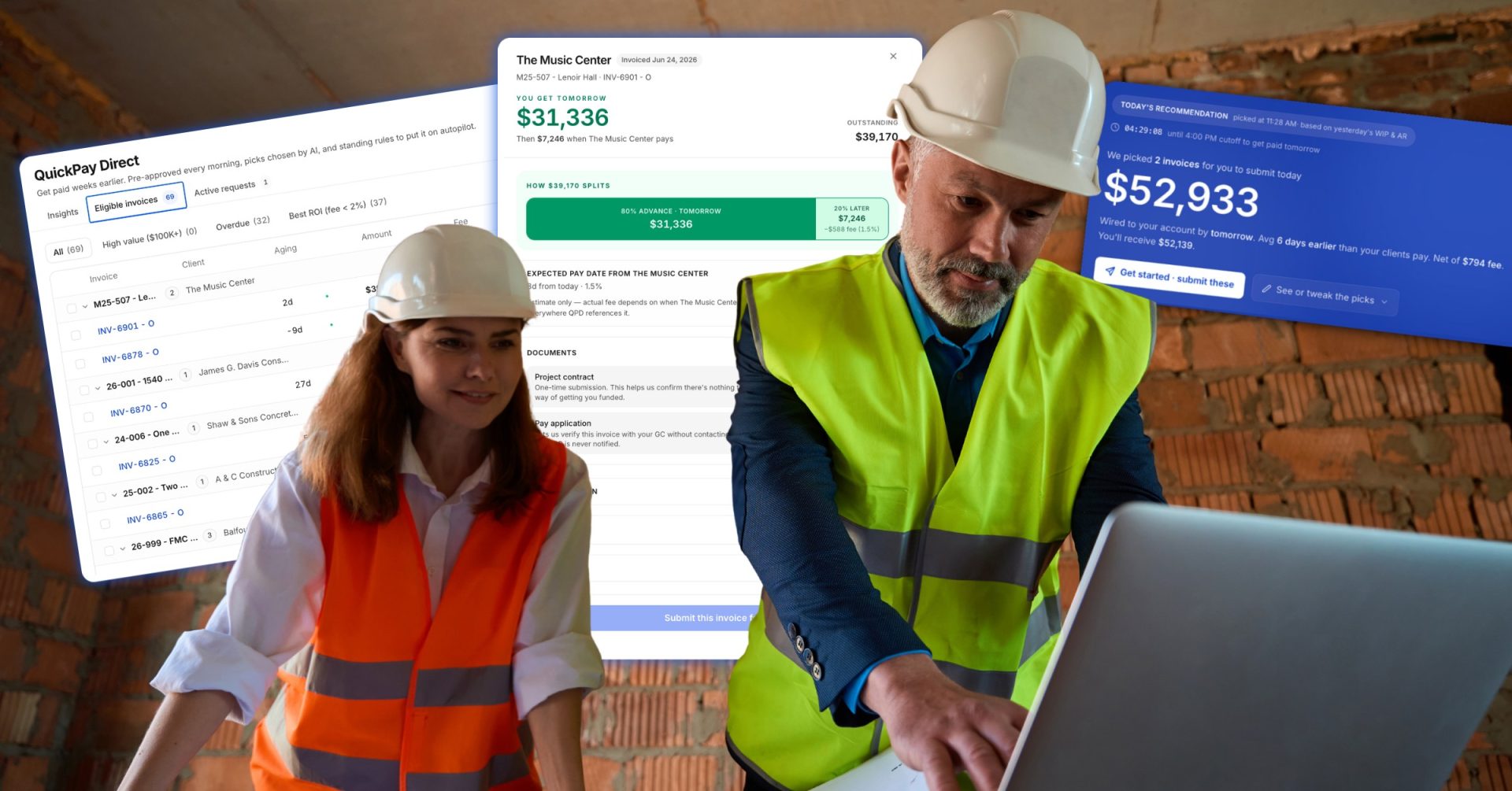
The Confindex report makes clear that concern about the availability of financing jumped by six percentage points in the second quarter alone. More than one in six construction financial professionals flagged it as a serious concern. That number will likely grow. When you’ve completed work and have an invoice outstanding, QuickPay Direct lets you convert that receivable into cash without waiting 56 days for the GC to pay it.
The subcontractors who come out of a tighter credit environment in the best shape are the ones who didn’t wait until the squeeze started to look for options.
Where QuickPay Direct Fits In
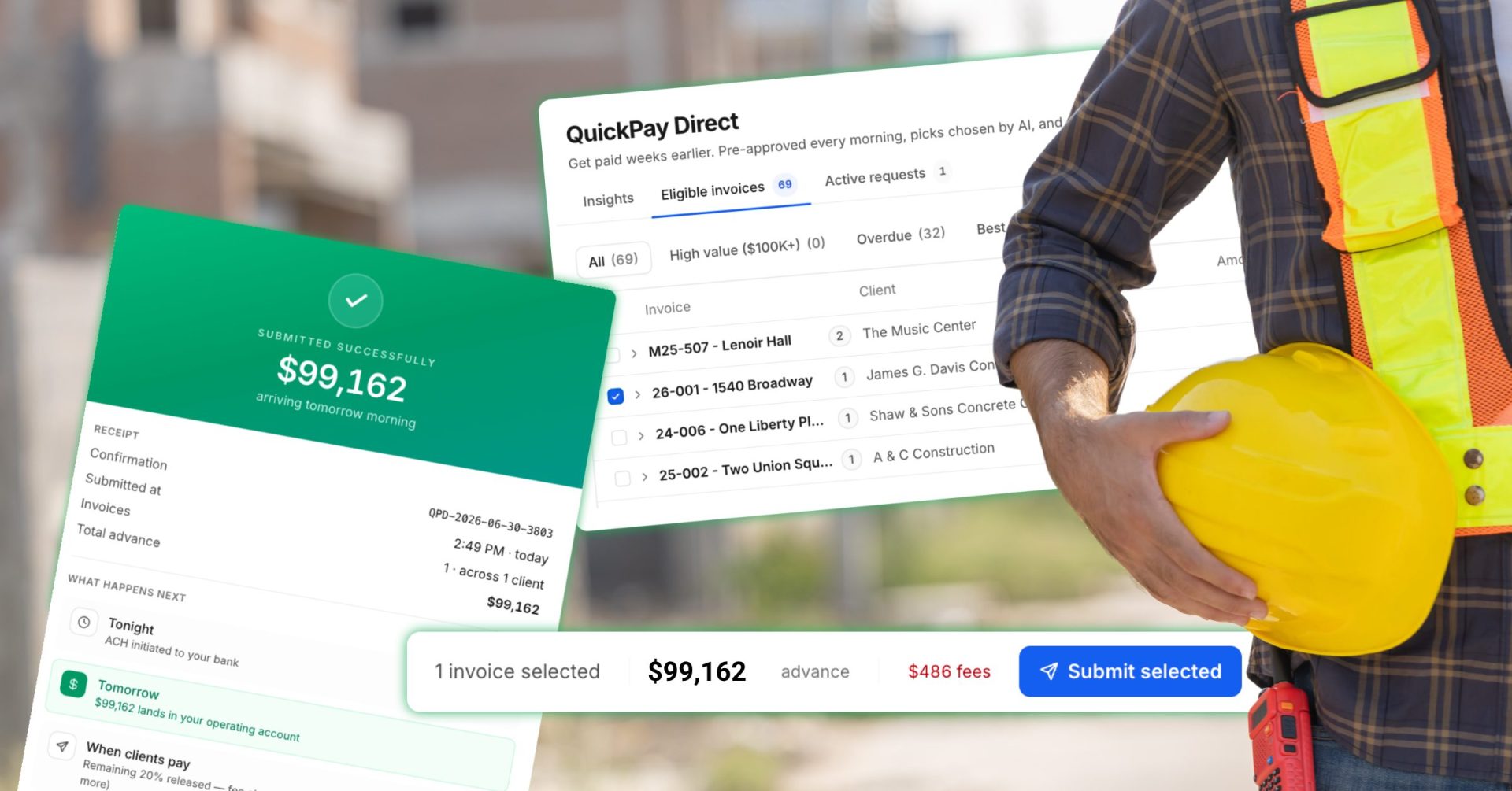
QuickPay Direct is a spot-factoring program designed specifically for subcontractors.
This isn’t a replacement for your bank line or your cash reserves. It’s meant to work alongside them. Think of it as another tool in the stack, one that’s tied directly to work you’ve already done, on a deal-by-deal basis, without locking you into long-term commitments or minimum volume requirements.
When your line of credit is healthy, you may not need it. But when a big invoice is sitting unpaid, and you’ve got material costs due on the next job, having QuickPay Direct available means you’re not forced to choose between growth and stability.
The Bottom Line
The construction industry is in a transitional moment. Demand in some sectors is strong. In others, the combination of higher financing costs, rising materials prices, and slow payment cycles is making thin margins even thinner.
Subcontractors who treat cash flow as a strategic priority, not just an accounting problem, will have the most options when conditions tighten further. The time to look at programs like QuickPay Direct isn’t when you’re already in a bind. It’s now, while you have the breathing room to evaluate it on your terms.




 Bruce Orr